
Field Notes · July 8, 2026 · 6 min · By Zachariah Pohl
Can dark skin get sunburned? Yes, and it is easy to miss
Melanin raises the burn threshold but never removes it. What sunburn looks like on deeper skin tones, and why it so often goes untreated.
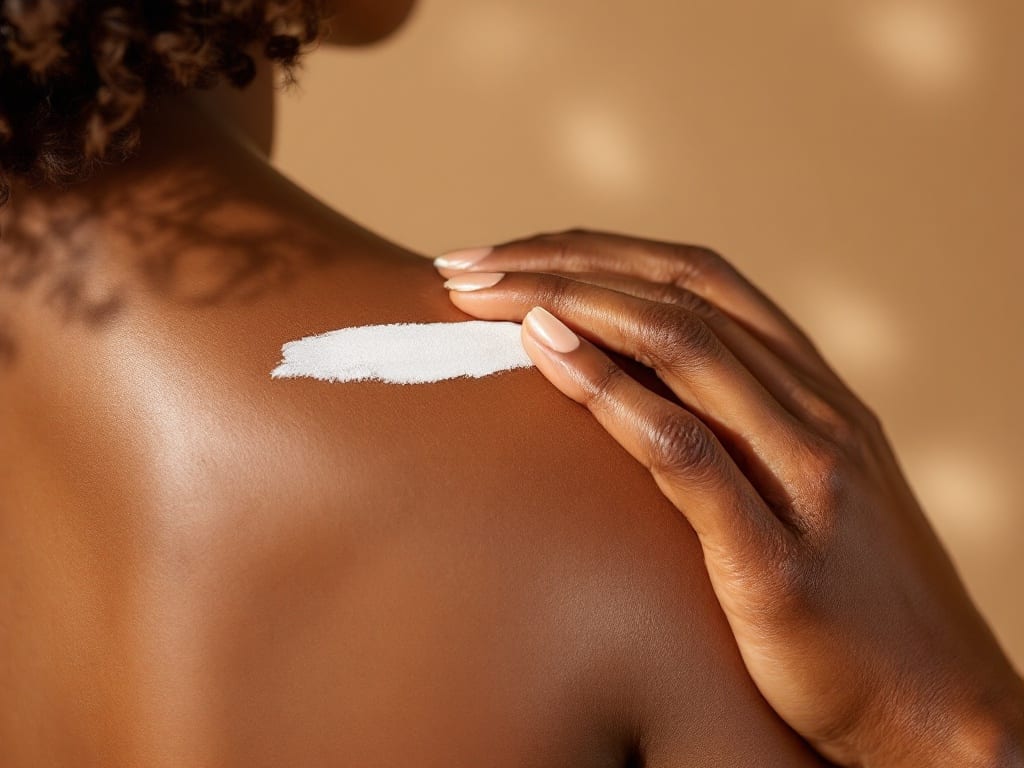
One of the most durable myths in sun care is that dark skin does not burn. It is repeated casually, often by people with dark skin who have been told it their whole lives, and it has a real cost: burns that go unrecognized, sun protection that never becomes a habit, and skin cancers found later than they should be. The truth is more useful. Melanin is genuine, built-in photoprotection, and it is also partial.
The numbers put it in perspective. Research comparing deeply pigmented skin with fair skin estimates that the melanin in the darkest skin tones filters ultraviolet radiation with an effect somewhere in the neighborhood of an SPF of 13, several times the natural protection of fair skin, which sits closer to 3. That difference is real and it explains why sunburn is far less common on deep skin tones. But an SPF of 13 is not immunity; it is a higher threshold. Enough sun, a reflective setting like water or snow, a high UV index day, or a photosensitizing medication will push past it, and the same inflammatory injury follows.
What that injury looks like is the practical problem. The textbook signs of sunburn, pink turning to red, were written for fair skin. On brown and deep brown skin, redness is often subtle or invisible. The burn announces itself instead as skin that feels hot, tight, tender, or itchy, sometimes with a tone shift toward deeper brown, purplish, or gray rather than red. Swelling and, in stronger burns, blistering and peeling happen exactly as they do on fair skin, and the healing sequence that follows is the same. Because the visual cue is missing, people routinely dismiss a burn as heat, dryness, or irritation, skip treatment, and stay in the sun, which deepens the dose.
Care, once you recognize it, does not change with skin tone: get out of the sun, cool the skin, moisturize while damp, hydrate, and reach for an anti-inflammatory, the full sequence in the first 24 hours of a sunburn. What does change is the aftermath. Darker skin responds to inflammation of any kind, burns included, with post-inflammatory hyperpigmentation: flat darker patches that can outlast the burn by months. A burn that fair skin forgets in a week can leave a visible mark on deep skin for a season, which is its own argument for prevention, and for treating the discoloration gently rather than scrubbing at it.
Then there is the question underneath the myth: skin cancer. It is true that skin cancer is significantly less common in people with dark skin. It is also true that when it occurs, it is diagnosed later on average and with worse outcomes, partly because neither patients nor clinicians are looking for it. Some of that risk is not sun-driven at all: melanomas in people of color arise disproportionately on the palms, soles, and nail beds, places worth checking during any skin self-exam. But ultraviolet damage still contributes to the common skin cancers on sun-exposed sites in every skin tone, and every burn adds to the cumulative risk. The American Academy of Dermatology's guidance on skin cancer in people of color at aad.org is a good, plain overview of what to watch for.
So the honest answer to the question in the title is yes, at a higher threshold, with quieter symptoms and a longer pigmentary tail. The protection playbook is the same one that works for everyone, a daily routine built around broad-spectrum SPF 30, with one practical upgrade: tinted mineral sunscreens now blend well on deep skin tones without the chalky cast that made older formulas unwearable, which removes the last good excuse for skipping them. Melanin is a head start, not a force field, and skin that starts with an advantage still deserves the habit that protects it.
Related reading: Sunburn myths that make it worse and Protecting children from sun damage.